
Strategic Housing Investment Plan 2027/28 – 2032/33
1. Introduction
1.1 All Scottish local authorities are required to prepare and update an annual Strategic Housing Investment Plan (SHIP). The core purpose of the SHIP is to set out strategic investment priorities for affordable housing over the five year period 2027/28 to 2032/33, and outline how the Council and its partners will deliver these priorities.
The SHIP is complementary to the East Dunbartonshire Local Housing Strategy (LHS) which has the core purpose of meeting the varying housing requirements of residents across East Dunbartonshire. The current LHS covers the period from 2023 to 2028.
1.2 The SHIP sets out how investment in affordable housing will be targeted to meet the objectives of the LHS, focussing on prioritisation and deliverability. A key objective is to increase the supply and quality of affordable housing that will enable people to successfully access suitable housing in their community and tenure of choice.
Capital investment in new-build affordable housing by the Council is set through the Council’s 10-Year Housing Capital Investment Plan, which is revised on an annual basis and was most recently published in March 2026, covering the period from 2026/27 to 2036/37.

2. East Dunbartonshire Local Housing Strategy
2.1. The Local Housing Strategy (LHS) is the vehicle for delivering national priorities of increasing housing supply across all housing tenures. The LHS sets out the strategic direction for the Council and its partners to tackle housing related issues within East Dunbartonshire over a five-year period. The LHS covers the period
2023-2028 and takes account of national and local priorities, housing need related evidence and resource implications. The Council monitors the LHS and the delivery of the agreed Action Plan on an annual basis.
The LHS vision is:
Everyone in East Dunbartonshire will have access to a climate-friendly, affordable, good quality home which connects to communities and promotes health and wellbeing.
To address this, the following four strategic priorities have been identified:
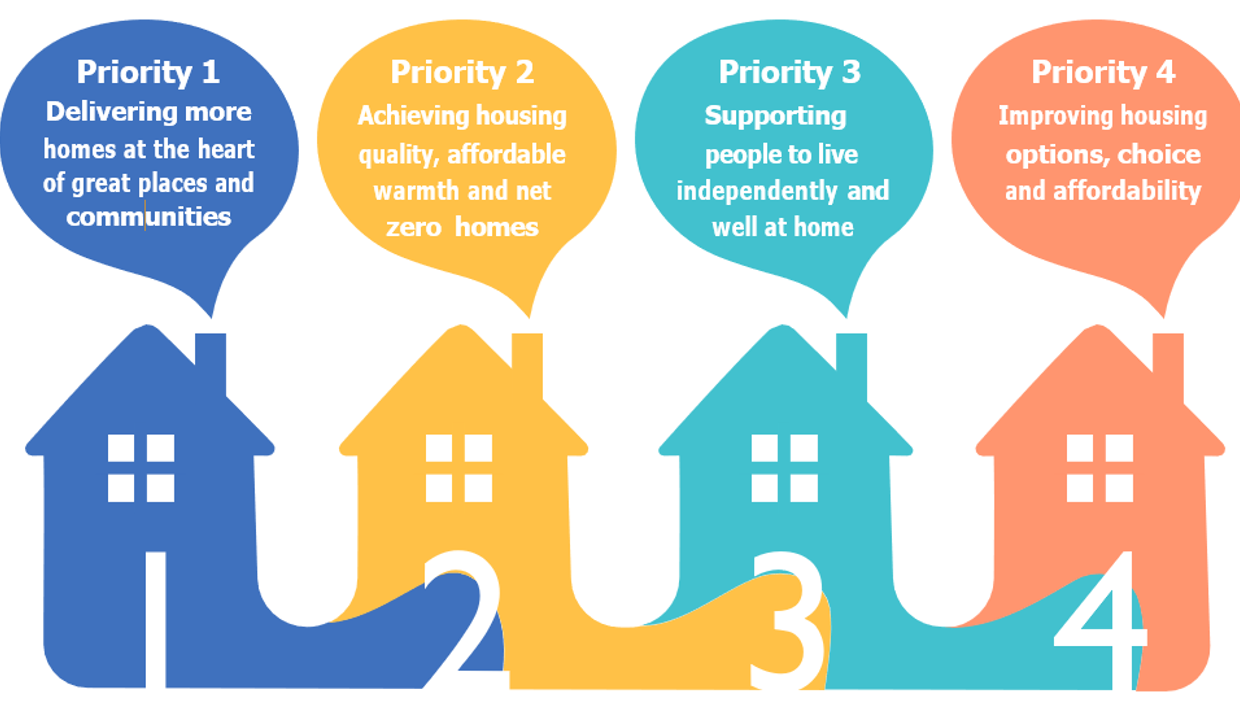
2.2. Each of the LHS priorities has a series of actions that drive activities to address housing system imbalances in East Dunbartonshire. LHS has set an annual Housing Supply Target (HST) for East Dunbartonshire of 245 units per annum with a target of 95 affordable housing dwellings per annum and 150 market dwellings per annum. The LHS target is linked to the Housing Need and Demand Assessment and covers a 10-year period. The Centre for Housing Market Analysis (CHMA) appraised HNDA3 as robust and credible in June 2024.
It should be noted that, as a result of the Planning (Scotland) Act 2019, a Minimum All Tenure Housing Land Requirement (MATHLR) is set for each authority area in the National Planning Framework (NPF).
2.3. NPF4 was published by the Scottish Government in February 2023 and states that the Local Development Plan must exceed the MATHLR through the setting of a Local Housing Land Requirement (LHLR). The next LDP for East Dunbartonshire therefore is required to provide supply of land to accommodate the delivery of a minimum of 250 dwellings per year, for 10 years. Therefore, the Housing Supply Target may require to be amended during the lifetime of the LHS.
2.4. The Local Housing Strategy will be monitored and reviewed on an annual basis. Outcomes and successes will be conveyed through the publication of annual Local Housing Strategy updates.
Table 1 - Housing Supply Targets (LDP)
| Target | Private | Affordable | All-Tenure |
|---|---|---|---|
|
Final Housing Supply Target per annum for East Dunbartonshire |
150 |
95 |
245 |
3. Local Development Plan and Affordable Housing Policy
3.1. The Council adopted Local Development Plan 2 (LDP2) in 2022 which replaced Local Development Plan 1 (LDP1) (adopted in 2017). LDP2 sets out the Council’s long-term land use strategy, planning policies and identifies sites for development and protection. Council officers identified a range of sites to be included within LDP2 for affordable housing provision and undertook feasibility studies of each site to determine viability for these housing development sites.
3.2. LDP2 continues the established affordable housing requirement of a 25% on-site developer contribution towards affordable housing for all new developments with 10 or more homes; and an equivalent commuted payment to be sought from developments of between two to nine homes. Specific guidance on the provision of affordable housing is incorporated into the main LDP2 document within guidance on Design and Placemaking.
3.3. Whilst the affordable housing policy remained unchanged for LDP2, additional criteria regarding the design of housing was introduced, as follows:
- Developments of all tenures must provide wheelchair and accessible housing, the detail for which is included within the Design and Placemaking Supplementary Guidance. Specifically, the guidance sets a threshold that 5 - 10% of all tenures on site should be provided as wheelchair and accessible housing (however the preference is for 10%)
- In the case of sites within 400m walking distance of town and village centres (including also Lenzie local centre), and where they are 10 units or more in total, a minimum of 25% of the units on site will be provided as smaller housing of no more than two bedrooms that are accessible without stairs (for example ground floor flats and flats with lift access).

3.4. Work on the next Local Development Plan (LDP3) is now underway. The new-style LDP will encompass a 10-year plan period, looking 20 years ahead, and will guide new development to meet the environmental, social, economic and housing needs of East Dunbartonshire up to 2038.
3.5. Under the new approach to LDP preparation brought about by the passing of the Planning (Scotland) Act 2019, the first key stage is the drafting of an Evidence Report. The purpose of the Evidence Report is to ensure that the Council has sufficient information with which to proceed with preparation of the Plan. This will improve the quality and effectiveness of a Proposed LDP through the provision of a range of data captured from a wide variety of sources, analysed to best inform the production of LDP content and strategy. On 19 June 2025, the LDP3 Evidence Report was approved at a meeting of the Council. It was subsequently submitted to Scottish Ministers for independent review – known as a Gate Check Review – in early July 2025.
3.6. It is anticipated that the Gate Check will take up to three months to complete. In the meantime, a public call for ideas/sites has been launched, during which time suggestions for the content of the Proposed LDP has been sought as well as the submission of housing and other sites to be considered for allocation in the plan. Following public consultation, examination by a Scottish Ministers-appointed reporter of the Proposed Plan is expected to conclude in late 2027, with the adoption and publication of LDP3 set for 2028.
3.7. The new LDP will incorporate all local planning policy on affordable housing provision, the precise content of which has yet to be determined but which is expected to take into account the criteria relating to wheelchair and accessible housing and proximity to centres as set out in section 3.3 above. LDP3 will also set out an appropriate policy approach relating to housing for older people and specialist housing. This will reflect the outcomes of independent research commissioned by the Council and Health and Social Care Partnership on the housing issues facing the growing population of older people in East Dunbartonshire, including policy and delivery solutions needed to meet such housing need at a local level.
4. East Dunbartonshire Housing Context
4.1 The key affordability issue in East Dunbartonshire continues to be high house prices. Owner occupation is the predominant tenure in East Dunbartonshire, at 81% of the overall housing stock. House prices in the owner-occupied sector remain high. According to the UK House Price Index Scotland, the average house price in East Dunbartonshire was £268,922 in May 2026, compared to the Scottish average of £195,355. East Dunbartonshire has the fifth highest average house price in Scotland of all Scottish local authorities. Only Edinburgh, East Lothian, Midlothian and East Renfrewshire Council areas have higher house prices on average.
4.2 NOMIS suggests that the median gross earnings in 2025 for individuals working full time was £47,268 in East Dunbartonshire, higher than the Scottish average of £40,331. This means that an individual on a median income would need to borrow a multiple of around six times their salary to afford an average property in the area. Therefore, there are limited affordable housing options provided by the market for residents of East Dunbartonshire on a modest or low income.
5. Demand for Affordable Housing
5.1East Dunbartonshire covers nine settlement areas, as seen in Table 2. As of April 2026, the Council had circa 3600 applicants on the Housing List with a housing stock of around 3900 properties. Demand for each settlement area is shown in Table 2 below, while Graph 1 illustrates the relative demand per property type and area.
Table 2 - First Choice of Housing –Demand and Stock by Area and Size (April 2026)
| Town | Stock | Applications | Lets in the last 3 years | Total |
|---|---|---|---|---|
|
Bearsden |
0 Bedroom - 12 1 Bedroom - 146 2 Bedroom - 80 3 Bedroom - 66 4 Bedroom - 7 5 Bedroom - 0 |
0 Bedroom - 0 1 Bedroom - 856 2 Bedroom - 383 3 Bedroom - 255 4 Bedroom - 88 5 Bedroom - 22 |
0 Bedroom - 2 1 Bedroom - 37 2 Bedroom - 20 3 Bedroom - 11 4 Bedroom - 1 5 Bedroom - 0 |
Stock - 311 Applications - 1604 Lets in the last 3 years - 71 |
|
Bishopbriggs |
0 Bedroom - 0 1 Bedroom - 202 2 Bedroom - 255 3 Bedroom - 120 4 Bedroom - 320 5 Bedroom - 0 |
0 Bedroom - 0 1 Bedroom - 982 2 Bedroom - 482 3 Bedroom - 320 4 Bedroom - 106 5 Bedroom - 23 |
0 Bedroom - 0 1 Bedroom - 89 2 Bedroom - 160 3 Bedroom - 62 4 Bedroom - 11 5 Bedroom - 0 |
Stock - 583 Applications - 1913 Lets in the last 3 years - 106 |
|
Kirkintilloch |
0 Bedroom - 0 1 Bedroom - 395 2 Bedroom - 713 3 Bedroom - 328 4 Bedroom - 45 5 Bedroom - 0 |
0 Bedroom - 0 1 Bedroom - 1201 2 Bedroom - 538 3 Bedroom - 352 4 Bedroom - 115 5 Bedroom - 30 |
0 Bedroom - 0 1 Bedroom - 89 2 Bedroom - 160 3 Bedroom - 62 4 Bedroom - 11 5 Bedroom - 0 |
Stock - 1481 Applications - 2236 Lets in the last 3 years - 322 |
|
Lennoxtown |
0 Bedroom - 0 1 Bedroom - 60 2 Bedroom - 153 3 Bedroom - 160 4 Bedroom - 26 5 Bedroom - 0 |
0 Bedroom - 0 1 Bedroom - 567 2 Bedroom - 234 3 Bedroom - 154 4 Bedroom - 59 5 Bedroom - 16 |
0 Bedroom - 0 1 Bedroom - 13 2 Bedroom - 38 3 Bedroom - 21 4 Bedroom - 3 5 Bedroom - 0 |
Stock - 399 Applications - 1030 Lets in the last 3 years - 75 |
|
Milgnavie |
0 Bedroom - 6 1 Bedroom - 192 2 Bedroom - 176 3 Bedroom - 182 4 Bedroom - 28 5 Bedroom - 0 |
0 Bedroom - 0 1 Bedroom - 884 2 Bedroom - 379 3 Bedroom - 240 4 Bedroom - 89 5 Bedroom - 24 |
0 Bedroom - 0 1 Bedroom - 33 2 Bedroom - 18 3 Bedroom - 28 4 Bedroom - 4 5 Bedroom - 0 |
Stock - 584 Applications - 1616 Lets in the last 3 years - 83 |
|
Milton of Campsie |
0 Bedroom - 0 1 Bedroom - 40 2 Bedroom - 59 3 Bedroom - 58 4 Bedroom - 17 5 Bedroom - 2 |
0 Bedroom - 0 1 Bedroom - 610 2 Bedroom - 305 3 Bedroom - 175 4 Bedroom - 69 5 Bedroom - 17 |
0 Bedroom - 0 1 Bedroom - 7 2 Bedroom - 8 3 Bedroom - 8 4 Bedroom - 3 5 Bedroom - 1 |
Stock - 176 Applications - 1176 Lets in the last 3 years - 27 |
|
Torrance |
0 Bedroom - 0 1 Bedroom - 6 2 Bedroom - 35 3 Bedroom - 28 4 Bedroom - 4 5 Bedroom - 0 |
0 Bedroom - 0 1 Bedroom - 693 2 Bedroom - 299 3 Bedroom - 186 4 Bedroom - 76 5 Bedroom - 14 |
0 Bedroom - 0 1 Bedroom - 1 2 Bedroom - 4 3 Bedroom - 6 4 Bedroom - 0 5 Bedroom - 0 |
Stock - 73 Applications - 1214 Lets in the last 3 years - 11 |
|
Twechar |
0 Bedroom - 0 1 Bedroom - 17 2 Bedroom - 57 3 Bedroom - 100 4 Bedroom - 22 5 Bedroom - 0 |
0 Bedroom - 0 1 Bedroom - 394 2 Bedroom - 181 3 Bedroom - 125 4 Bedroom - 45 5 Bedroom - 11 |
0 Bedroom - 0 1 Bedroom - 6 2 Bedroom - 10 3 Bedroom - 8 4 Bedroom - 8 5 Bedroom - 0 |
Stock - 196 Applications - 756 Lets in the last 3 years - 32 |
|
Totals |
0 Bedroom - 18 1 Bedroom - 1058 2 Bedroom - 1528 3 Bedroom - 1042 4 Bedroom - 155 5 Bedroom - 2 |
0 Bedroom - 0 1 Bedroom - 1886 2 Bedroom - 898 3 Bedroom - 576 4 Bedroom - 180 5 Bedroom - 42 |
0 Bedroom - 2 1 Bedroom - 229 2 Bedroom - 300 3 Bedroom - 163 4 Bedroom - 32 5 Bedroom - 1 |
Stock - 3808 Applications - 3582 Lets in the last 3 years - 727 |
6. House Sizes
6.1. Of all applicants presently on the Council’s housing list, just over 50% require a one bed property; around a quarter require two beds and 15% require three beds, as illustrated in Table 2. There appears to be lesser demand for larger four and five bed properties at 6%, with the exception of Bishopbriggs, Bearsden and Kirkintilloch which have much higher demand for larger properties compared to supply. Although the demand for larger units may be lower than demand for smaller homes, there is still a real need to provide larger homes to meet the needs of families living in East Dunbartonshire. The turnover of larger properties is low compared to turnover of smaller properties.
6.2. In view of the above, East Dunbartonshire requires a mix of all property sizes. The Council’s Housing List indicates that one bed properties are in greatest need. Nevertheless, building a high proportion of one bed properties will not give East Dunbartonshire the flexibility to meet people’s varying housing needs in-situ or create a mixed sustainable community.
6.3. The target percentages for each size are suggested at Table 3. However, this may need to vary to take cognisance of individual circumstances, client group, location and management issues.
Table 3 – Target Percentage Mix
| Property size | Target percentage |
|---|---|
|
1 bed |
25% |
|
2 bed |
50% |
|
3 bed |
20% |
|
4/5 bed |
5% |
6.4. The Council’s New-Build Affordable Housing Programme anticipates a mix of one bed 39%, two bed 41%, three bed 19%
and four bed 1%.This target mix generally complements identified housing demand trends although it may be noted that the target and proposed number of two- bedroomed homes being built
as part of the Council’s housing programme is higher than current demand indicates. The
higher proportion of two-bedroomed units will allow some tenants to remain in their homes even if their circumstances change, such as an increase in family size. The Council will continue to use its Open Market Purchase scheme to acquire larger four or five bedroomed homes to meet housing need and demand where possible as this provides good value for money and can more easily meet immediate demand.
7. Homelessness and the Rapid Rehousing Transition Plan
7.1. The Scottish Government issued Guidance on ‘Rapid Rehousing Transition Plans’ (RRTP) in late 2018 following recommendations from the Homeless and Rough Sleeping Action Group. Funding has been allocated by the Scottish Government to support local authorities’ transition to Rapid Rehousing.
7.2. Each local authority is required to develop their plan in collaboration, over a planned and costed phase of seven years (2019/20 to 2025/26) and is an integral part of the Strategic Housing Investment Plan (SHIP). The RRTP will end in March 2026, and the Council looks forward to working with the Scottish Government on any new Plan that will be put in place to help eradicate homelessness in East Dunbartonshire.
7.3. A key aim of the RRTP is to reduce the waiting time on the homelessness list, and the Council and RSLs have had some success in meeting this aim. At the start of 2019/20, 25% of applicants had been awaiting an offer of settled accommodation longer than three years. Since 31 March 2022, no homeless households have waited longer than three years to receive an offer of permanent accommodation.
7.4. A key aim of the RRTP is to prioritise the needs of homeless households to enable them to access affordable housing by targeting that a minimum of 50% of total allocations are made to homeless households by social landlords. During 2024/25, 90 homeless households were housed by the Council which accounts for 53% of the total 169 lets made by the Allocations Team. A further 53 households were allocated a home by an RSL through the nominations process. Of these, 34 were offered to applicants who had been assessed as homeless which accounts for 64%.
7.5. To further promote RRTP principles to reduce the waiting time on the homelessness list for larger families, one temporary accommodation property was converted from temporary accommodation to mainstream accommodation for an existing household. The amount of conversions to mainstream accommodation reached a peak of 27 during the previous year of 24/25 due to a reduction in the number of temporary accommodation placements identified for that year. During 2025/26, nineteen households were also assisted to move to accommodation in the private sector via the Rent Deposit Guarantee/Private Sector Scheme.

New Build Contribution towards RRTP
7.6. New build housing provision has made a significant direct contribution towards alleviating homelessness since the establishment of the RRTP.
7.7. As part of the ongoing commitment to help households experiencing homelessness, a target of 20% for houses and 35% for flats of new let allocations for those experiencing homelessness has been applied to new build housing developments in East Dunbartonshire. Table 4 highlights that over the last few years a significant number of both RSL and Council new build properties were allocated to applicants assessed as being homeless or threatened with homelessness.
New Build Properties Allocated to Homeless Households
2021/22
Housing Provider - Council
- New Build Completions To Date: 88
- Number to Homeless Households: 27.
Housing Provider - RSLs
- New Build Completions To Date: 67
- Number to Homeless Households: 25.
Totals
- New Build Completions To Date: 155
- Number to Homeless Households: 52.
2022/23
Housing Provider - Council
- New Build Completions To Date: 37
- Number to Homeless Households: 18.
Housing Provider - RSLs
- New Build Completions To Date: 63
- Number to Homeless Households: 11.
Totals
- New Build Completions To Date: 100
- Number to Homeless Households: 29.
2023/24
Housing Provider - Council
- New Build Completions To Date: 47
- Number to Homeless Households: 8.
Housing Provider - RSLs
- New Build Completions To Date: 0
- Number to Homeless Households: 0.
Totals
- New Build Completions To Date: 47
- Number to Homeless Households: 8.
7.8. Between 2021/22 and 2023/24 172 Council and 130 RSL new build units have been completed. Of these, 53 Council homes and 36 RSL properties were allocated to applicants assessed as being homeless or threatened with homelessness by the Council. This indicates that 29.5% of all new build lets made during these years were allocated to homeless applicants, which sits within the 20% and 35% target for houses and flats respectively. During 2024/25 there were 20 new build completions by the Council and 0 by RSLs. Of the Council lets, seven (35%) were allocated to households who were assessed as being homeless by the Council. The allocation to homeless families is higher than the target given the properties were all terraced housing/cottage flat types.
7.9. RSL’s have an extensive building programme during the next few years, and 153 social rent and 16 MMR units will complete in 2025/26. These properties have yet
to be let, and the Council will work with the developing RSLs to ensure that a fair number are allocated to applicants who have experienced homelessness.
7.10. The Council aims to allocate approximately half of its own new build properties to transfer list applicants.
When these applicants move, they vacate an existing council home – 50% of these properties are
subsequently let to homeless applicants. As such, the true impact on homelessness amounts to a further 25% of the total no of homes completed, significantly increasing the number of overall lets allocated to homeless households.
8. Intermediate Housing Types
Shared Equity
8.1. The Council has its own version of the Scottish Government LIFT New Supply Shared Equity (NSSE) scheme, known as Shared Equity Supply Scheme (SESS). The Council’s scheme is based on the same principles as NSSE, however SESS does not receive grant funding. The discount is generally achieved on the differential between the agreed purchase price and the market value. Properties need to be sold at least 20% below the market value to be affordable to lower income households.
8.2. SESS is primarily aimed at first time buyers. However, the Council prioritises applications to ensure that those with the greatest housing need are considered first. This includes:
- People who are homeless or threatened with homelessness and have had a homelessness assessment carried out by the Council
- People with a disability whose current home doesn’t suit their needs
- Residents living in housing that is Below Tolerable Standard
- People leaving the armed forces, or veterans
- People who have experienced a significant change in their circumstances, such as separating households or are subject to mortgage stress.
8.3. Since late 2013 the Council has sold 38 properties under the SESS scheme. The Council has just undertaken research into demand for Shared Equity and MMR (see below) including the administration of these. The continued success of the scheme is dependent upon broader economic conditions. However, it is likely that the Council will continue to promote SESS in current and future housing developments as an affordable housing tenure but in particular areas.

8.4. Mid Market Rent is another form of affordable housing and, to date, has been provided solely through Registered Social Landlords in East Dunbartonshire. Tenants generally pay a lower rent than the area’s market rent level, but more than local social housing rents. Starting rents for new Mid Market Rent homes are often similar to the Local Housing Allowance. Mid Market Rent might be suitable for people on incomes that are not quite enough to afford home ownership, or private sector rents. These properties generally come with floor coverings, blinds, and white goods. The research mentioned above has identified localities where MMR would work best. The Council will work with the RSLs to promote Mid Market Rent developments in these locations.
Open Market Shared Equity Scheme
8.5. The LIFT Open Market Shared Equity Scheme (OMSE) is administered by Link Housing Association on behalf of the Scottish Government. The scheme is similar to NSSE and SESS in that it allows eligible applicants to purchase a home at a discounted rate so that it is affordable to them and suitably meets their needs. The fundamental difference is that OMSE allows residents to purchase existing/second hand homes in the open market, while NSSE and SESS specifically relate to new build provision. The Council promotes the scheme to applicants who indicate an interest in shared equity properties.
8.6. All applicants who complete the Common Housing Register (CHR) application form for housing are asked if they have an interest in intermediate housing options. Table 5 highlights potential demand from housing list applicants as at August 2025 for intermediate housing options which shows a reasonable demand for all types.
Table 5 - Intermediate Housing Demand
| Tenure type | % of applicants stating an interest (2025) |
|---|---|
|
Shared Equity |
17% |
|
Open Market Shared Equity |
11% |
|
Mid Market Rent |
33% |
|
Shared Ownership |
18% |
9. Open Market Purchases
9.1. For a number of years, the Council has operated an open market purchase scheme that has played a pivotal role in increasing affordable housing supply since its implementation, focussed on the purchase of homes in areas of high housing need. Buying on the open market allows the Council to target high demand property types that are difficult to address through new development – such as family homes in Bishopbriggs, Bearsden, Milngavie and Lenzie, where land values and a limited land supply mean the development of new larger affordable homes are less viable. Growing the housing stock also allows the Council to reduce instances of homelessness across the authority. This is demonstrated by the fact that in 2024/25, of all the properties let by the Council through open market purchases, 77% of these homes were allocated to those on the Council’s Homeless list. This is a key priority of the LHS.
9.2. As part of the scheme, the Council also targets the purchase of properties within mixed tenure blocks. This helps the Council meet its Scottish Housing Quality Standard (SHQS) and Energy Efficiency Standards for Social Housing (EESSH) requirements, improving energy efficiency and so helping reduce fuel poverty. During the period 2016/17 to 2024/25, there were 123 open market purchases, and to date there have been 19 properties purchased in 2025/26 which has had a positive impact on meeting housing need in the local authority area.
Empty Homes
9.3. The number of reported empty private sector homes within East Dunbartonshire remains relatively low. Despite the low numbers, officers are seeking to address the issue, which is considered a wasted resource and which can have a negative effect on neighbouring communities. The current lack of power for Councils to tackle empty privately-owned homes is also an issue and the Council is keeping up-to-date with any new legislation that may be on the horizon, for example the introduction of Compulsory Sales Orders which would allow the local authority to force the sale of empty homes to enable them to be brought back into use.
9.4. Currently the Council does not have an Empty Homes Strategy but with the increased focus on this area of work, the intention is to work towards establishing a strategy as soon as possible. The Scottish Empty Homes Partnership has provided support and training to officers with a view to implement a more proactive approach to reducing the number of empty homes. In addition to providing tailored advice and resource signposting to property owners, improvements have been made to the data sharing systems between departments and the level and type of engagement between officers and empty homeowners. The aim of this increased communication is to obtain an understanding of the reasons for a property being empty and what opportunities exist to bring that home into use again, including available grants or an acquisition by the Council to provide affordable housing where appropriate.
9.5. Over the last three financial years, one long term empty home has been brought back into use through acquisition by the Council during 2025/26.
Housing in Town Centres
9.6. Creating affordable housing within East Dunbartonshire Town Centres is an initiative supported by the Local Housing Strategy, Local Development Plan 2, National Planning Framework 4 and individual Town Centre Strategies. Priority is placed on regenerating existing areas to provide attractive and vibrant town centres where people want to work and live.
9.7. Officers are currently reviewing two possible refurbishment opportunities of Council-owned properties within Kirkintilloch town centre. In addition to this, engagement with the Regeneration Team within the Council is ongoing, with the aim of identifying any suitable vacant or underused sites or properties which have the potential to provide affordable housing.
10. New Build Affordable Housing
10.1 The Council’s Affordable Housing Investment Programme has progressed since the approval of the Housing Capital Investment Plan in March 2026. The plan includes a total of nine sites across East Dunbartonshire, and a summary of the programme is provided in Table 6 below which also includes reserve and potential new sites. One site is nearing completion, five sites are moving into imminent construction over the next few months and pre-construction activity for the remaining three sites continues with the aim to submit planning applications in the autumn of this year.
10.2 The programme aims to deliver approximately 302 new affordable homes over a five-year period, which will include a variety of flats, cottage flats and houses. Including reserve and potential sites, this figure increases to 373. The estimated total development value of the programme is £122.859m. Details of the challenges affecting each site are contained within Table 7.
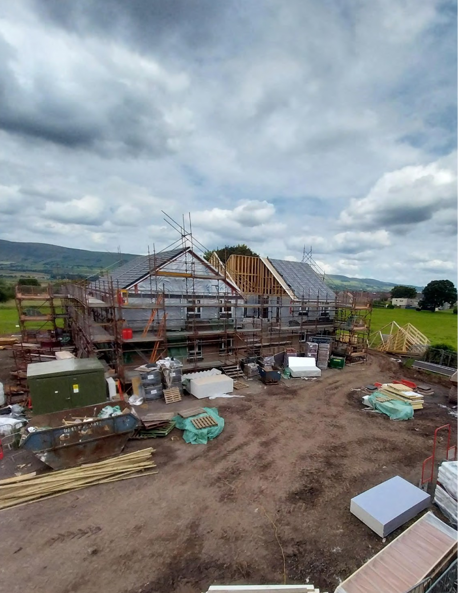
10.3 Fifteen new affordable houses at Twechar Canalside, adjacent to the recently completed Twechar Outdoor Pursuits Centre are nearing build completion. The development is scheduled to complete in October 2026. In addition to supporting the wider regeneration of the area, the completed houses will be the first of the Council’s development sites constructed to Passivhaus standard.
10.4 The viability of new-build affordable housing development continues to be affected by a range of issues which exist within the social housing sector. Construction costs, increased borrowing costs, reductions in available grant funding and restrictions on rent increases present a challenge to social landlords when assessing site viability. These issues, combined with relatively few available sites within the authority and in some cases, less than favourable site conditions, add strain to the Council’s new-build aspirations. The Council continue to liaise with the Scottish Government and local stakeholders to manage and mitigate risks while promoting the housing development programme.
Table 6 – East Dunbartonshire Council Affordable Housing Development Programme at September 2025
| Phase/Site | No. of Units | Status |
|---|---|---|
|
A1 - Twechar Canalside |
15 |
On site |
|
A - Cleddans, Kirkintilloch |
50 |
Site progressing |
|
A - Auchinairn Primary, Bishopbriggs |
63 |
Site progressing |
|
A - Nithsdale Crescent, Bearsden |
32 |
Site progressing |
|
A - Campsie View Primary, Lenzie |
27 |
Site progressing |
|
A - Main St, Torrance |
12 |
Site progressing |
|
A - Merkland Primary School, Kirkintilloch |
43 |
Site progressing |
|
B Former Police Station, Main St, Milngavie |
8 |
Refurbishment |
|
B Former Police Station, Kirkintilloch Rd, Bishopbriggs |
5 |
Initial enquiries on-going, remains in Police Scotland ownership. |
|
B Union St, Kirkintilloch |
3 |
Possible refurbishment |
|
B - Hunter Rd, Milngavie |
1 |
Possible refurbishment |
|
B - Huntershill, Bishopbriggs |
14 |
Site progressing |
|
C - Glasgow Road |
54 |
Site progressing |
|
D - Derrywood Rd, Milton of Campsie |
43 |
Reserve site to progress |
|
D - Kelvindale Nursery, Torrance |
11 |
Reserve site to progress |
Future Opportunities
10.5 The Council's Development and Investment Service collaborates closely with stakeholders to identify possible development sites and refurbishment opportunities on an ongoing basis.
10.6 The LDP3 process is being used to find new locations for affordable housing. Since the call for sites process began in July 2025, officers have collaborated with the Planning Service to identify possible locations that have the potential for affordable housing development.
Affordable Housing Contribution from Private Developers
10.7 East Dunbartonshire Council and RSLs work in partnership with a range of private housing developers to deliver affordable housing. There are currently no private developments which the council are working with for off-the-shelf opportunities, however it will continue to work with private developers to ensure that the requirements of the Council’s Affordable Housing Policy are met in relation to future housing provision.
Affordable Housing Provision by RSLs
10.8 The RSL sector has made a valuable contribution to affordable housing supply over the last few years. Since April 2019, RSLs have developed a total number of 378 homes throughout East Dunbartonshire. These comprise 323 homes for social rent, 22 shared equity and 33 Mid-Market Rent homes. This healthy tenure mix promotes much needed social rented units as well as desirable intermediate housing options. Additionally, it is anticipated that a further 274 RSL homes will be complete during the lifetime of this SHIP.
11. Development Constraints
11.1To be able to deliver affordable housing on schedule, any development constraints require to be identified as early as possible to allow mitigation measures to be planned and adopted if appropriate. Officers have been working with the contractors and consultants to identify and mitigate any constraints within the Council’s Affordable Housing Development programme described above at Section 10.
11.2 Table 7 identifies known constraints and sets out potential resolutions and timescales to ensure that any constraints are resolved by the estimated start date.
Table 7 – Development Constraints – Council Sites
| Project Address | Development Constraints | Potential Resolutions | Timeframe to be resolved | Lead Responsibility |
|---|---|---|---|---|
|
Main St, Torrance |
Concerns raised by Planning Service |
Reviewing design of proposed flatted development |
Dec 2026 |
Development & Investment Service |
|
Nithsdale Crescent
|
Existing services under the site |
Pre- construction activity post demolition of final block |
Oct 2026 |
Development & Investment Service |
|
Huntershill, Bishopbriggs
|
Question over drainage connection, |
Investigation of drainage options |
Dec 2026 |
|
|
Derrywood, Milton of Campsie |
Not identified as residential within LDP2 |
Reserve site – potential windfall or consideration for development as part of the next LDP |
2027 or later |
Development & Investment Service |
|
Kelvindale Nursery, Torrance |
Site not in HRA ownership |
Reserve site – still to be identified as Estates surplus |
2027 |
Development & Investment Service - Estates Service |
|
Glasgow Road, Kirkintilloch |
Topography |
High Density Development |
Dec 2026 |
Development & Investment Services |
|
Hunter Rd, Milngavie |
Small site capable of accommodating 2 units – cost viability to be determined |
Potential refurbishment being considered |
Dec 2026 |
Development & Investment Services |
12. Supplementary Grant Funding for Affordable Housing Provision
12.1The Housing Infrastructure Fund (HIF) was launched in 2016 to help RSLs and Councils with grant support for the unlocking of sites that will deliver affordable homes in addition to the Affordable Housing Supply Programme (AHSP) and as in line with local authority strategic priorities.
12.2 East Dunbartonshire Council will investigate opportunities to bid for support from the Housing Infrastructure Fund to progress the development of affordable housing where required.
13. Non-Grant Funding
13.1. The Council has budgeted to invest approximately £122.859m in new affordable housing over the lifetime of the SHIP – for all priorities of site delivery. This includes an outline assumption of around £23.296m of grant funding towards directly contracted new build. A further spend of £20m has been budgeted for open market purchases/ Rental off the Shelf Scheme (ROTS) with a Scottish Government grant contribution of £8.75m.
13.2. The remaining funding for the programme* is comprised of:
- £1.952m of Ring-Fenced Reserves for years 1 and 2
- • £169.470m of Prudential Borrowing against the HRA 30-year business plan
[note that these figures will be subject to review ahead of the Council’s ten-year Housing Capital budget plan in 2027 – date to be confirmed].
14. Council Tax Second Home Discount
14.1 New legislation in April 2024 means that second and empty homes are now liable to 200% Council Tax compared to a previous discount of 10%. In previous years additional funding from this reserve has been made available to support the delivery of affordable housing to maximise provision.
14.2 The funds generated from Developer Contributions and from Council Tax Second Home Discount are either held in reserve or spent that year on the council’s new build programme.
15. Affordable Housing Standards
15.1 The development of any new rented homes in East Dunbartonshire will be built to comply with the applicable Building Regulations and will include all the ‘Housing for Varying Needs Standards’ essential features as set out by the Scottish Government’s Guidance. In parallel with the Council’s Affordable Housing Development Programme a Design Guide was completed in 2022. These provide the standards, policies and regulations that East Dunbartonshire Council expect in their new affordable housing and in any refurbishment projects. A set of Authority Construction Requirements are also developed for each of the development sites as we work through the detailed design stage and sit alongside this Design Guide.
15.2 All new development set out as part of the SHIP, will adhere to new core standards in relation to such aspects as automatic fire suppression systems and carbon free heating systems. The Council will also actively promote new standards, where appropriate, around home working space, EV charging points and balconies in those instances where open space is not possible, and the approach is supported by Planning Policy.
15.3 Under the AHIP2 new construction methods have been assessed for the sites and viability of using these have been looked at. The Council have engaged two contractors with two design teams to deliver the Affordable Housing Development Programme as mentioned previously. There is collaboration and sharing of ideas over efficient methods of construction practise amongst other construction issues.
Sustainable Development
15.4 The Council and RSLs are committed to delivering sustainable, energy-efficient homes which contribute to reducing fuel poverty and greenhouse gas emissions. This commitment is supported by national requirements relating to zero direct emissions heating and heat networks:
- The Scottish Government’s New Build Heat Standard, introduced through the Building (Scotland) Amendment Regulations 2023, applies to new buildings where a building warrant application was made on or after 1 April 2024. The standard requires new buildings to be constructed without the use of direct emissions heating systems, supporting the transition towards zero direct emissions heating.
This prohibits the use of direct emissions heating systems in new buildings applying for a building warrant from 1 April 2024 - The Heat Networks (Scotland) Act 2021 also places duties on local authorities in relation to the development of heat network zones, including identification of potential areas for Heat Network Zones (HNZs). The Local Heat and Energy Efficient Strategy (LHEES) provides the strategic framework for identifying opportunities for heat networks and improving the energy efficiency of buildings.
15.5 The Scottish Government’s Strategy document Housing to 2040 sets out the long-term vision for housing in Scotland to 2040 and a route map to get there. It aims to deliver our ambition for everyone to have a safe, good quality and affordable home including that all new homes delivered by RSLs and Local Authorities will be zero emissions by 2026. All new homes delivered with grant funding through the AHSP from 1 December 2023 will be prohibited from installing direct emissions heating systems. As part of the drive to deliver more energy efficient homes and reduce emissions from new buildings, the Scottish Government is developing a Scottish equivalent to the Passivhaus standard, with relevant regulations planned to come into force from March 2028.
Delivery partners will promote sustainable design, energy efficiency measures and renewable heat and energy technologies in all new affordable homes. New development will take account of the most relevant standards and guidance, as well as the requirements of the Climate Change (Scotland) Act 2009 and the Council’s own net zero targets and climate adaptation objectives. This work will be informed by the:
- Local Housing Strategy (LHS)
- Climate Action Plan (CAP)
- Local Heat and Energy Efficiency Strategy (LHEES)
- Testing of options through the market as part of the Affordable Housing Development Programme.
15.6 This is reflected in the LHS framework through actions and activities of ‘Priority 2: Achieving housing quality, affordable warmth and net zero homes.’ The key actions and commitments by local partners for LHS Priority 2 seek to improve housing condition, energy efficiency and eradicate fuel poverty.
15.7 The Council’s own Affordable Housing Development Programme is being designed to achieve high standards of energy efficiency and sustainability, including being designed and built to achieve Passivhaus Certification. In relation to this the Council have developed a Standard House Type which will accommodate the Housing for Varying Needs (HfVN) space standards as well as the requirements for new technologies in relation to the use of zero direct emissions heating, renewable energy and Passivhaus design.
15.8 Through East Dunbartonshire’s Local Heat and Energy Efficiency Strategy (LHEES), a feasibility study was undertaken in relation to a Heat Network in Kirkintilloch town centre. The study concluded that a heat network would not be commercially viable at this time. The findings will, however, inform future consideration of heat network opportunities should market conditions, available funding, or other circumstances change.
15.9 The Council’s Climate Action Plan 2026-2040, approved in June 2026, provides an overarching framework for reducing greenhouse gas emissions and improving resilience to the effects of climate change. The Plan includes a specific theme on buildings and heat decarbonisation and supports the delivery of energy-efficient, low carbon and affordable homes. The Council has a target to achieve net zero greenhouse gas emissions from its direct emissions and purchased energy by 2036, with net zero for other emissions across East Dunbartonshire by 2045.
Design and Placemaking
15.10 The Scottish Government’s design policy is set out in Designing Streets and Creating Places. The Council implements the principles set out in these documents through its own LDP2 policy, Design and Placemaking (Policy 10), which promotes distinctive, safe and pleasant, easy to move around, welcoming, adaptable, and resource efficient places.
15.11New-style LDPs (see section 3.5) must encompass all local statutory planning guidance of applicability for the determination of planning applications, meaning that it will no longer be possible to publish separate statutory guidance to support the new LDP. With particular relevance to the determination of housing applications, it is anticipated that the content of the current Design and Placemaking Supplementary Guidance will be updated and incorporated into LDP3 where appropriate to help to improve the outcomes of the design and application processes.
Local Living and 20-Minute Neighbourhoods
15.12 The Scottish Government has committed to the concept of 20-minute neighbourhoods through the Programme for Government and National Planning Framework 4. 20-minute neighbourhoods are based on the concept of 'local living' by giving people the ability to access the majority of the services and facilities they need daily within a 20-minute walk, and by accessing safe active travel and public transport options. They aim to create communities that are vibrant, diverse, sustainable and supportive of healthy living.
15.13 Access to high quality housing is a key component of successful 20-minute neighbourhoods and helps to underpin the concept of local living. The availability of a range of housing mix, including different sizes, types, and tenures in an area is therefore an important consideration for supporting local living, enabling people to remain in their local community as circumstances change throughout their lives.
15.14 Action 1.3 in the LHS 2023 states that housing should 'support the delivery of 20-minute neighbourhoods by considering the potential for placemaking throughout the design and development of new build housing and existing stock.'
15.15 LDP3 will support this by setting out a robust policy framework for local living and 20-minute neighbourhoods. This will be informed by relevant quantitative and qualitative data on existing housing stock and local housing needs and demands, including a bespoke ‘20-minute neighbourhood mapping tool’ which will allow for detailed analysis of housing data at a neighbourhood level.
16. Gypsy and Travellers Communities Housing
16.1 Local Housing Strategy Guidance (2019) encourages local authorities to understand the needs of the Gypsy and Travellers communities and requires local authorities to evidence recent engagement to better understand those needs. LHS Guidance states that engaging directly with Gypsy and Travellers communities timeously on unauthorised encampments is a proactive way to do this. Engagement over a period of time may be the most effective way of identifying local need as communities can be in flux.
16.2 A ministerial working group established a Gypsy and Travellers Action Plan in December 2017 and links to wider ambitions set out in the National Performance Framework to create a fairer Scotland and stronger and cohesive communities. Housing to 2040, the new national vision for housing in Scotland, aims to embed the needs of the Gypsy and Travellers communities in housing and planning policy. Through their More Homes Scotland Approach, the Scottish Government introduced the Gypsy and Travellers Accommodation Fund that sits alongside the Affordable Housing Supply Programme (AHSP) and will support local authorities in delivering quality homes (but not houses) to Gypsy and Travellers communities.
16.3 There is no explicit demand for a Gypsy and Traveller site in East Dunbartonshire. Since 2019 only one unauthorised site has been used for encampments and early engagement identified the occupants acknowledged they had no intention to settle and moved on after two nights. Early engagement with an extended family who were interested in settling within the East Dunbartonshire area in 2021 took place, however during discussions, the family decided on settling elsewhere. If there is any new declared interest in future from the Gypsy and Traveller community, then this would be supported to explore opportunities.
16.4 Scotland’s fourth National Planning Framework (NPF4) was published in February 2023 and includes policies on the accommodation needs of Gypsy and Travellers communities and mirrors the principles of 20-minute neighbourhoods. The Council’s Local Housing Strategy 2023-2028 sets out actions within LHS Priority 3 ‘Supporting People to live independently and well at home’ that aim to improve outcomes for Gypsy and Travellers through ongoing engagement and dialogue.
16.5 Discussion will continue with the Gypsy/Travellers community to ascertain if there is any local need and demand for a site as part of the evidence gathering for LDP3. The Council continues to liaise with a neighbouring local authority to identify any movements that might exist between council areas that could be identified as housing need.
17. Wheelchair Accessible Housing
17.1 The Council is committed to the delivery of wheelchair and accessible homes in all new residential developments provided through the Strategic Housing Investment Plan. The Council’s Design and Placemaking Supplementary Planning guidance advises that 5- 10% of any new build development should be wheelchair and accessible housing. In most cases it is expected that the number of wheelchair and accessible dwellings will be 10%. The Housing Service targets this across the SHIP programme, tailoring the balance on each site to context and to local needs. The Council’s own Housing programme targets 10% of homes as being wheelchair accessible or amenity housing.
17.2 The LDP2 contains an all tenure target to underpin and extend the requirements across the private and RSL sectors. The Plan proposes the need to provide a minimum of 5- 10% of the total units for each tenure type as wheelchair and accessible housing.
17.3 As part of the Council new build programme, a number of developments will include housing for the ambulant disabled, particularly older people. This term embraces a wide group of people with a range of mobility problems or lack of agility and strength, but whose physical disability permits them to walk with or without the use of walking aids. The design need is for a home that is easy to move around with a walking frame or sticks or crutches, has a bathroom that can be adapted to their needs and fittings / service controls that are within reach and easy to use.
18. Older People
18.1 The Council and Health and Social Care Partnership undertook research in 2019 in relation to Older People and Specialist Housing in East Dunbartonshire. The research involved face-to-face interviews of 500 residents indicated that around 41% of older people in East Dunbartonshire have a life limiting condition or disability. Of this overall group:
- 7% have health needs requiring aids and adaptations, which can be met through In Situ solutions or in new mainstream new build developments
- 10% have physical frailties which mean they are unable to get up and down stairs
- 5% are unable to easily access their own property due to the presence of steps. This category has a need for dedicated wheelchair options.
18.2 Suitably accessible housing should be provided for those most in need of it. The Council has therefore set a target of at least 10% of new properties to be wheelchair and accessible housing, the target for which is aligned with that proposed in the LDP2.
18.3 Local Housing Strategy 2023-28 Priority 3 aim is ‘Supporting people to live independently and well at home’. As part of the outcomes and actions for this priority the Council continue to review the wheelchair space standards in order to determine if the Housing for Varying Needs designs are appropriate to meet the needs of older people and other specialist needs groups. Such standards have been considered when developing EDC’s Standard House Type, Design Guide and is being considered as part of the Authority Construction Requirements agreed for the Council’s AHIP2 development programme.
18.4 The Housing Investment Team works with the Council’s Occupational Therapists on individual specialist cases and general requirements.
Officers continue to consult with local HSPC representatives to understand general accommodation requirements across the authority area. Information sharing platforms and regular meetings are being planned to explore options for new developments and refurbishments across the medium and long term. This includes reviews by various Council departments on existing facilities and new sites which could form part of East Dunbartonshire’s LDP3.
18.5 Work on the new LDP (LPD3) show current estimates that there will be approximately 101 wheelchair and accessible homes for affordable housing during the next five years. In accordance with the approved LDP2, private sector developers require to adhere to Section 3 of the wheelchair accessible Housing Guidance as a minimum in terms when designing wheelchair housing.
18.6 As part of the Housing Land Audit it is planned to introduce data gathering on completions and programming for wheelchair and accessible housing for all tenures. There were 11 amenity and 2 Wheelchair accessible homes delivered in 2025/26 for social rent.
Table 8 – Homes Planned By Area Through 5 Year SHIP Period
| Locality | Amenity Homes | Wheelchair Homes | Large Family Homes | 4 Bed Homes |
|---|---|---|---|---|
|
Bearsden |
2 |
0 |
8 |
0 |
|
Bishopbriggs |
11 |
2 |
18 |
0 |
|
Kirkintilloch |
50 |
13 |
25 |
7 |
|
Lennoxtown |
0 |
1 |
0 |
0 |
|
Lenzie |
1 |
1 |
7 |
0 |
|
Milngavie |
18 |
0 |
0 |
0 |
|
Milton of Campsie |
0 |
0 |
0 |
0 |
|
Torrance |
0 |
0 |
16 |
0 |
|
Twechar |
0 |
2 |
3 |
1 |
|
Totals |
82 |
19 |
77 |
8 |
19. Child Poverty Action Report
19.1As set out under the Child Poverty (Scotland) Act 2017, The Council remains committed to the statutory targets to be achieved by 2030 (all after housing costs):
- Less than 10% of child in relative poverty
- Less than 5% in absolute poverty
- Less than 5% in combined low income and material deprivation, and
- Less than 5% in persistent poverty.
19.2East Dunbartonshire continues to perform favourably against these targets relative to the Scottish average, though poverty remains concentrated within specific localities including Auchinairn, Hillhead and Harestanes and Lennoxtown.
19.3Access to warm, affordable homes remain central to this ambition. Hillhead Housing Association completed the development of 41 new homes, which directly increased the supply of affordable, energy-efficient homes within one of East Dunbartonshire’s highest-poverty localities supporting the SHIP’s continued contribution to reducing household costs and tackling child poverty locally.
19.4 The cost-of-living crisis continues to affect our communities, with higher housing costs placing further pressure on low-income families.
19.5 We continue to promote the Real Living Wage and Fair Work principles, embedding these within contracts and procurement via agreed policy and procedures
19.6 We continue to maximise community benefit clauses in contracts and procurement to support local employment and training opportunities.
20. Affordable Housing Supply Programme Funding (AHSP)
20.1 The Scottish Government encourages Local Authorities to over-programme within their SHIP to ensure that, where slippages occur, there remains a healthy and viable stock of projects to take forward. Regional variations in the actual delivery of SHIP programmes also means that grant can be reallocated from less to more active areas to support areas of greater activity. Due to the high level of housing need and demand in East Dunbartonshire, it is essential that as many homes are built over the SHIP period as possible.
20.2 The total minimum level of Resource Planning Assumption (RPA) funding for the Council’s strategic local programme for 2026/27 is £7.738M. The Scottish Government have this year confirmed the budget for the next four years till 2029/30. This is as follows:
Table 9 – RPA Funding 2026/27 – 2029/30
| 2026/27 | 2027/28 | 2028/29 | 2029/30 |
|---|---|---|---|
|
£7.738m |
£7.970m |
£8.209m |
£8.455m |
Previously the RPA would be confirmed on an annual basis so this allows a more accurate basis for forecasting budget income and expenditure. Also to note is that benchmarks have increased in March of this year. This is welcome in that it reduces the outlay per unit expenditure for the council or RSL. It does however mean that fewer units will be delivered for the allocated RPA. As has been noted the annual Housing Supply Target (HST) for East Dunbartonshire has a target of 95 affordable housing dwellings per annum. The RPA falls short of being able to fund this. This represents only a proportion of the overall projected grant requirements for this period of the SHIP and therefore there remains uncertainty in future business planning and programming.
21. New Supply Targets
21.1 Over the five-year lifetime of the SHIP, 765 potential new homes could be built, of which 740 would be houses for social rent by either the Council or a RSL. This is in addition to the 25 planned for Mid Market Rent by a RSL. The SHIP also targets that 125 homes will be purchased during the five year period on the open market by the Council using the Rental off the Shelf subsidy. As mentioned previously, the Housing Supply Target in the LDP2 and LHS is 95 affordable units per annum. The SHIP is approximately one third higher. Some sites will fall into the low and medium priority categories and therefore may not progress.
21.2 The highest proportion of new supply is provided either for Council Housing or RSL Social Rent. In future years, tenure types may change given demand for intermediate housing tenures, particularly for sites which are currently unallocated or are categorised as being low priority. A breakdown of the projects by settlement area and tenure type is shown in Table 10 below. Note that the anticipated mix of tenure within each site may vary as each site progresses through the design and development process.
Table 10 - New affordable housing supply
| Locality | Council House/RSL Social Rent | Shared Equity (RSL and Council) | Mid Market Rent |
|---|---|---|---|
|
Twechar |
45 |
0 |
0 |
|
Lenzie |
35 |
0 |
0 |
|
Kirkintilloch |
340 |
0 |
25 |
|
Bearsden |
39 |
0 |
0 |
|
Bishopbriggs |
87 |
0 |
0 |
|
Milngavie |
39 |
0 |
0 |
|
Lennoxtown |
48 |
0 |
0 |
|
Torrance |
64 |
0 |
0 |
|
Milton of Campsie |
43 |
0 |
0 |
|
Rental off the Shelf - All |
125 |
0 |
0 |
|
Total |
871 |
0 |
25 |
22. Consultation
22.1 In the development of the SHIP, the Council’s Development & Investment Service continues to engage with other Council Services and key partner organisations such as Housing Management, Planning, Regeneration, Social Work, Private Developers, RSLs, Tenants’ and residents to ensure that shared priorities and their wider remits are incorporated in the SHIP. This engagement activity is carried out regularly through several forums including:
- The Tenant Participation Working Group
- RSL Programme Meetings
- Liaison Meetings with Council development colleagues in Planning, Roads/Drainage and other statutory consultees
- Meetings with Developers in relation to Planning submissions.
22.2 As part of the consultation process for the SHIP in 2020, the draft document was placed on the Council’s website with comments invited from a range of interested parties including local tenants and residents. A brief summary of key points identified by stakeholders included:
- Preference for future provision to comprise more family homes, particularly three bed houses compared to flats
- Support for intermediate housing options in addition to social rented provision, especially Low-Cost Housing to buy and Shared Equity
- Agreement that amenity housing provision should include features to assist vulnerable tenants, principally level access or lift access to all front doors and accessible showers
- Endorsement of the promotion of energy efficiency standards to help reduce fuel poverty and meet climate change, including Passivhaus housing standards.
- Support for future housing provision to meet minimum size requirements.
- The comments above have been taken into consideration, and we are actively using them to inform our AHIP2. We have had stakeholder workshops including the HSCP to inform our Design Guide and Construction Requirements for the new programme.
22.3 In preparation and to inform the new LHS 2023- 28, there was extensive consultation and engagement with all stakeholders. This included an early engagement survey, stakeholder conference and option identification and appraisal workshops.
22.4 We meet with the RSL’s throughout the year between programme meetings to discuss delivery and to overcome specific issues. We had one collective group meeting with the RSLs in East Dunbartonshire in September 2023 since Covid-19. We do aim to do this again as this is a way to continually consult and collaborate on affordable housing delivery and best practise.
23. Equalities and Strategic Environmental Assessment
23.1 In line with The Equality Act 2010, an Equalities Impact Assessment has been prepared in conjunction with the SHIP.
23.2 The aim of the Equalities Impact Assessment is to identify the likely or actual effects of this Strategic Housing Investment Plan on residents and stakeholders. This includes identifying any aspect of the SHIP that could indirectly, intentionally or unintentionally discriminate against the users of our services or our staff. Where there are any potential negative impacts identified, action will be taken to eliminate or mitigate these negative impacts.
23.3 Additionally, a Strategic Environmental Assessment has been carried out on the SHIP. This involved undertaking a pre-screening assessment of the SHIP in accordance with Schedule 2 of the Environmental Assessment (Scotland) Act 2005. The pre-screening found that the SHIP itself is considered to have no or minimal environmental impacts, but further consideration would be given to the LHS and Local Development Plans in relation to new development.
24. Monitoring Arrangements
24.1 The key to delivering successful projects and to maximise the provision of affordable housing is through effective partnership working between a range of skilled agencies and organisations. Securing the necessary additional funding is fundamental if the SHIP is to be delivered successfully. It is equally essential that commitment is made to the monitoring and management of that funding as forecast project delivery programmes develop.
24.2 The LHS is reviewed annually and any progress towards delivering the LHS priorities is presented to Committee. Since the implementation of the LHS there has been significant progress towards delivering on Priority 1 in relation to the delivery of affordable housing. The Council has regular discussions with RSLs operating in the local authority area which has helped deliver on the key actions of Priority 1.
24.3 Should additional funding be made available and/or new projects are brought forward, discussion will take place with the Council and the Scottish Government to agree funding of the projects. All new projects will be assessed against the Council’s prioritisation methodology.
24.4 Progress on the delivery of affordable housing will be assessed against the range of actions against the LHS outcomes and SHIP investment programme. The results will be used to update the LHS and succeeding years SHIP programme as appropriate
25. Prioritisation of Projects
25.1 It is essential that the SHIP maximises the provision of affordable housing to meet the high level of housing need. Although housing need and demand primarily can be met through the provision of social rented accommodation, some intermediate tenures may contribute to meeting housing need. The Council has carried out an analysis of potential projects and assessed them accordingly. A number of factors are taken into account including compliance with LHS and LDP objectives, and deliverability. The scoring criteria is subject to regular review.
25.2 Each project has been prioritised according to the methodology attached as Appendix 1. The prioritisation outcome for each project can be found at Table 11 below.
Table 11: East Dunbartonshire Affordable Housing Projects – 2027/28 – 2032/33
| Development | Developer | Housing Units | Priority |
|---|---|---|---|
|
Glasgow Road,Kirkintilloch |
East Dunbartonshire Council |
Council House/RSL Social Rent Units - 48 Shared Equity Units - 0 Mid Market Rent Units - 0 |
Medium |
|
Merkland School, Kirkintilloch |
East Dunbartonshire Council |
Council House/RSL Social Rent Units - 43 Shared Equity Units - 0 Mid Market Rent Units - 0 |
High |
|
Cleddans Playing Fields, Kirkintilloch |
East Dunbartonshire Council |
Council House/RSL Social Rent Units - 50 Shared Equity Units - 0 Mid Market Rent Units - 0 |
High |
|
Union Street, Kirkintilloch |
East Dunbartonshire Council |
Council House/RSL Social Rent Units - 3 Shared Equity Units - 0 Mid Market Rent Units - 0 |
Medium |
|
High Street Phase 1, Kirkintilloch |
Clyde Valley Housing Association |
Council House/RSL Social Rent Units - 22 Shared Equity Units - 0 Mid Market Rent Units - 16 |
Medium |
|
High Street Phase 2, Kirkintilloch |
Clyde Valley Housing Association |
Council House/RSL Social Rent Units - 19 Shared Equity Units - 0 Mid Market Rent Units - 0 |
High |
|
High Street Phase 3, Kirkintilloch |
Clyde Valley Housing Association |
Council House/RSL Social Rent Units - 16 Shared Equity Units - 0 Mid Market Rent Units - 0 |
High |
|
Fauldhead Road South, Kirkintilloch |
Hillhead Housing Association 2000 |
Council House/RSL Social Rent Units - 16 Shared Equity Units - 0 Mid Market Rent Units - 0 |
High |
|
Donald McKinnon Avenue, Kirkintilloch |
Caledonia Housing Association |
Council House/RSL Social Rent Units - 90 Shared Equity Units - 0 Mid Market Rent Units - 0 |
High |
|
Roman Road, Kirkintilloch |
Trust Housing Association |
Council House/RSL Social Rent Units - 33 Shared Equity Units - 0 Mid Market Rent Units - 9 |
Medium |
|
Lindsaybeg Road, Lenzie |
To Be Confirmed |
Council House/RSL Social Rent Units - 8 Shared Equity Units - 0 Mid Market Rent Units - 0 |
Medium |
|
Campsie View School, Lenzie |
East Dunbartonshire Council |
Council House/RSL Social Rent Units - 27 Shared Equity Units - 0 Mid Market Rent Units - 0 |
High |
|
Beech Road (former Auchinairn Primary), Bishopbriggs |
East Dunbartonshire Council |
Council House/RSL Social Rent Units - 63 Shared Equity Units - 0 Mid Market Rent Units - 0 |
High |
|
Huntershill, Bishopbriggs |
East Dunbartonshire Council |
Council House/RSL Social Rent Units - 12 Shared Equity Units - 0 Mid Market Rent Units - 0 |
High |
|
Crofthead, Bishopbriggs |
Loretto Housing Association |
Council House/RSL Social Rent Units - 7 Shared Equity Units - 0 Mid Market Rent Units - 0 |
Low |
|
Former Police Station, Kirkintilloch Road, Bishopbriggs |
East Dunbartonshire Council |
Council House/RSL Social Rent Units - 5 Shared Equity Units - 0 Mid Market Rent Units - 0 |
Medium |
|
Nithsdale Crescent, Bearsden |
East Dunbartonshire Council |
Council House/RSL Social Rent Units - 32 Shared Equity Units - 0 Mid Market Rent Units - 0 |
High |
|
Milngavie Road, Bearsden |
To Be Confirmed |
Council House/RSL Social Rent Units - 7 Shared Equity Units - 0 Mid Market Rent Units - 0 |
Low |
|
Hunter Road, Milngavie |
East Dunbartonshire Council |
Council House/RSL Social Rent Units - 1 Shared Equity Units - 0 Mid Market Rent Units - 0 |
Medium |
|
Craigton Road, Milngavie |
Link Housing Association |
Council House/RSL Social Rent Units - 30 Shared Equity Units - 0 Mid Market Rent Units - 0 |
Medium |
|
Former Police Station, Main Street, Milngavie |
East Dunbartonshire Council |
Council House/RSL Social Rent Units - 8 Shared Equity Units - 0 Mid Market Rent Units - 0 |
Medium |
|
Campsie Golf Club, Lennoxtown |
To Be Confirmed |
Council House/RSL Social Rent Units - 30 Shared Equity Units - 0 Mid Market Rent Units - 0 |
Medium |
|
Lennox Castle Hospital, Lennoxtown |
East Dunbartonshire Council |
Council House/RSL Social Rent Units - 30 Shared Equity Units - 0 Mid Market Rent Units - 0 |
Low |
|
Lennoxlea, Lennoxtown |
To Be Confirmed |
Council House/RSL Social Rent Units - 13 Shared Equity Units - 0 Mid Market Rent Units - 0 |
Low |
|
Derrywood Road, Milton of Campsie |
East Dunbartonshire Council |
Council House/RSL Social Rent Units - 43 Shared Equity Units - 0 Mid Market Rent Units - 0 |
Medium |
|
Kelvindale Nursery, Torrance |
East Dunbartonshire Council |
Council House/RSL Social Rent Units - 11 Shared Equity Units - 0 Mid Market Rent Units - 0 |
Medium |
|
Torrance Main Street, Torrance |
East Dunbartonshire Council |
Council House/RSL Social Rent Units - 12 Shared Equity Units - 0 Mid Market Rent Units - 0 |
High |
|
East of Ferrymill Motors, Torrance |
To Be Confirmed |
Council House/RSL Social Rent Units - 8 Shared Equity Units - 0 Mid Market Rent Units - 0 |
Low |
|
Kelvin View, Torrance |
Caledonia Housing Association |
Council House/RSL Social Rent Units - 33 Shared Equity Units - 0 Mid Market Rent Units - 0 |
High |
|
Glen Shirva Road, Twechar |
East Dunbartonshire Council |
Council House/RSL Social Rent Units - 30 Shared Equity Units - 0 Mid Market Rent Units - 0 |
Medium |
|
Canalside, Twechar |
East Dunbartonshire Council |
Council House/RSL Social Rent Units - 15 Shared Equity Units - 0 Mid Market Rent Units - 0 |
High |
|
Rental Off the Shelf |
All |
Council House/RSL Social Rent Units - 125 Shared Equity Units - 0 Mid Market Rent Units - 0 |
High |
|
Total Number of Units |
Council House/RSL Social Rent Units - 860 Shared Equity Units - 0 Mid Market Rent Units - 25 |
885 |